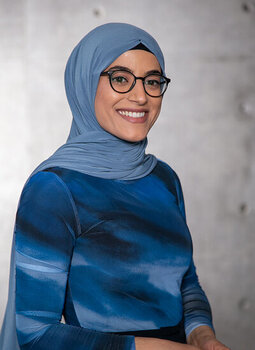
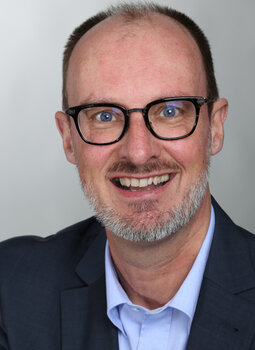
RheinAhrCampus, Remagen has also integrated Refugees in the Classrooms. Dr. Laurent Borgmann teaches “International Business Simulations”, “Managing Cultural Diversity” and “Intercultural Communication” courses aimed at international students and German students who want to internationalize themselves. Starting from 2015 he has been inviting some refugees to these classes as guests, too. Every semester there are around five refugees who complete whole classes, including regular participation, homework, and final exams.
Refugees in classrooms at Campus Remagen
Wael Al-Halaki used his academic internship on campus to boost his digital skills while taking part in selected courses taught in English. This format was a powerful preparation for academic success.
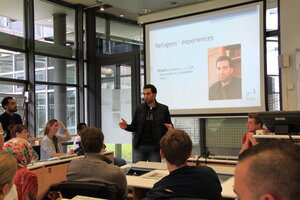
© HS Koblenz
“On the course International Business Simulations, l had the chance to develop my presentation skills (e.g. for the press conference at the end of the semester). l learned how to create an email account and how to write effective messages.”
Many of the refugees who moved to the Rhineland since 2015 were in fact students or even graduates of universities in their home countries. RheinAhrCampus tried to open access to higher education and the German labour market - not only through appetizer study initiatives, but also by integrating high-potential refugees into individual classes delivered in English. This turned out to be an arrangement for mutual benefit as they added new perspectives to classroom discussion.
Based on the success of the first steps, short-term orientation internships followed. Thus, Wael Al-Halaki was able to gain useful competencies and gain professional skills in 2016. This was not an easy process, as compulsory language and integration courses took first priority. However, Wael was highly motivated to be part of an international and intercultural campus culture and to find out about routines in the higher education sector.
Of course he was also integrated into excursions with exchange students, e.g. to Telekom Campus and the Cherry Blossom in Bonn. He also participated in the “Managing Cultural Diversity” seminar in autumn. According to Dr. Borgmann, Head of Languages / International Affairs, apetizer offers like that can be essential preparatory step for successful full-time studies. “Even though young and talented refugees may already have German language skills as a basis to start from, they may still need to learn how to succeed in interactive seminar-style settings with active participation, oral exams - and a high level of digitalisation with E-Learning and Blended Learning Formats.” However, the story of Wael and many other refugees show that this initial investment pays off!